Revolving Voices
Client: New York City Housing Authority & Public Housing Community Fund
Partners: Tamra Cosby
Location: Astoria Houses in Queens, NY - USA
Service: Community Engagement, Design, Fabrication, Installation
Date Installed: 8/2026
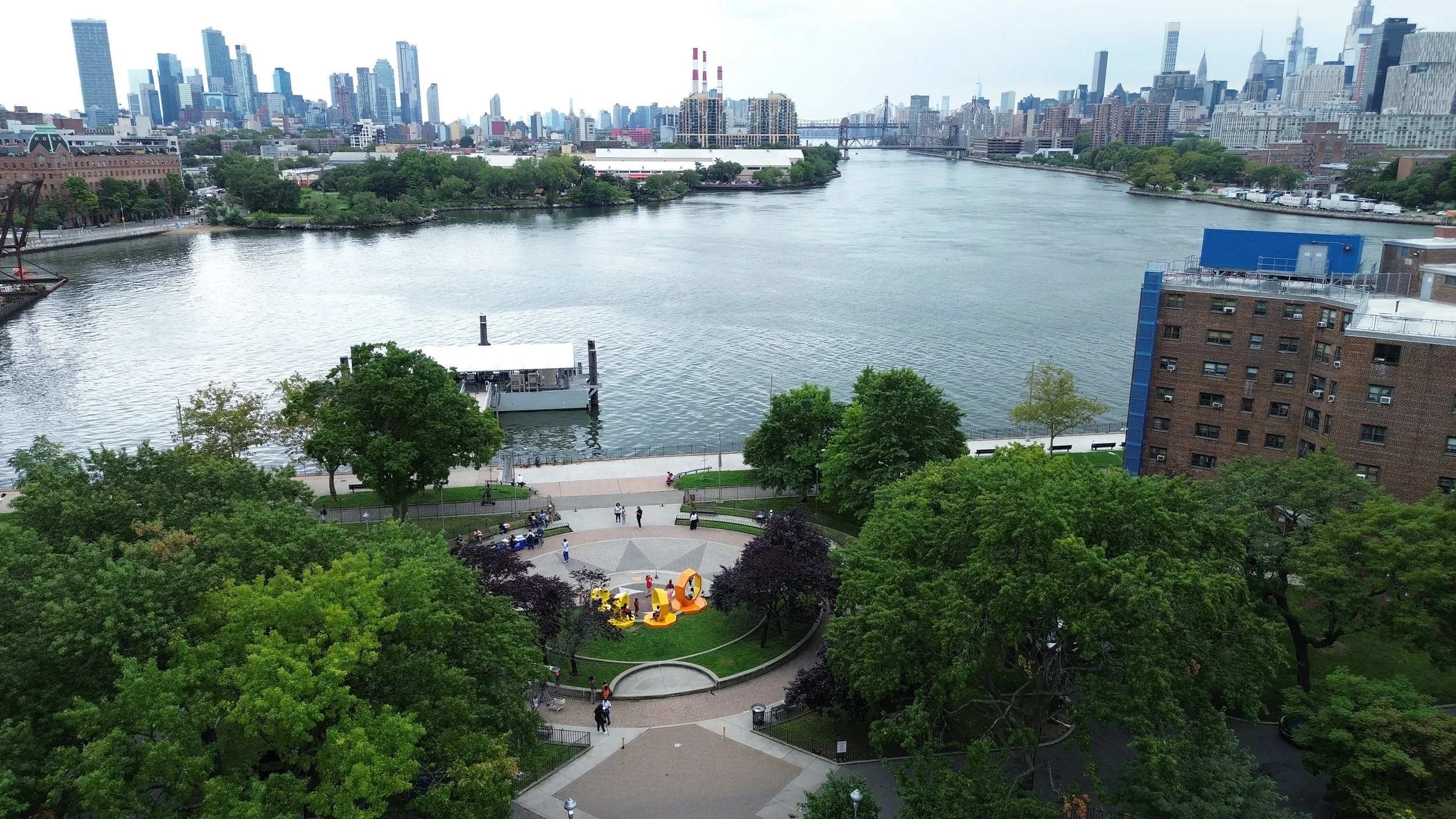
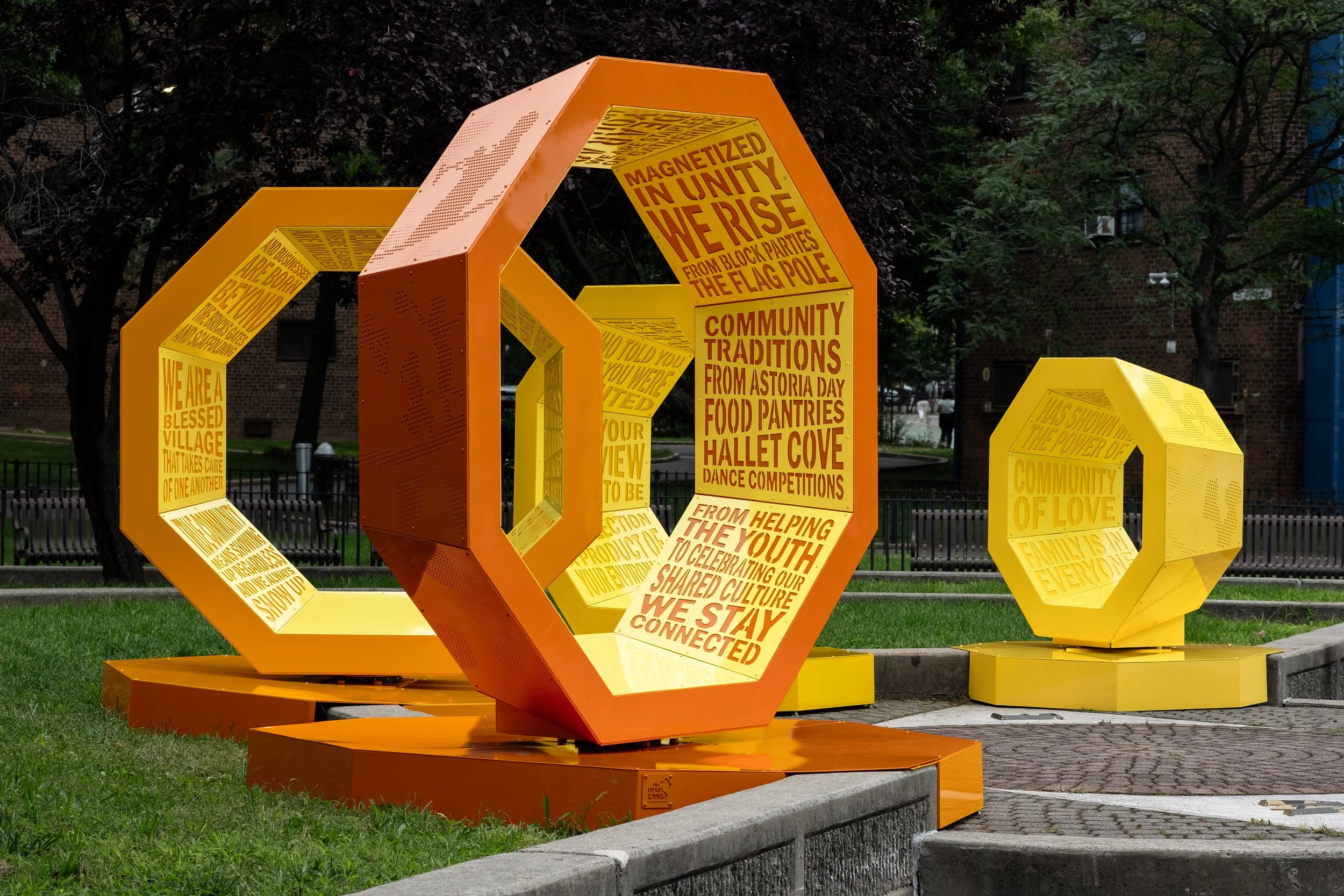
Located at the edge of Astoria Houses, directly adjacent to the Astoria waterfront and ferry dock, Revolving Voices is a permanent public artwork and gathering space that celebrates the voices, talents, stories, and cultural histories of the Astoria Houses community. Created in collaboration with local poet Tamra Cosby, the installation physically represents the opportunity to share one’s voice, talent, and message within the public realm.
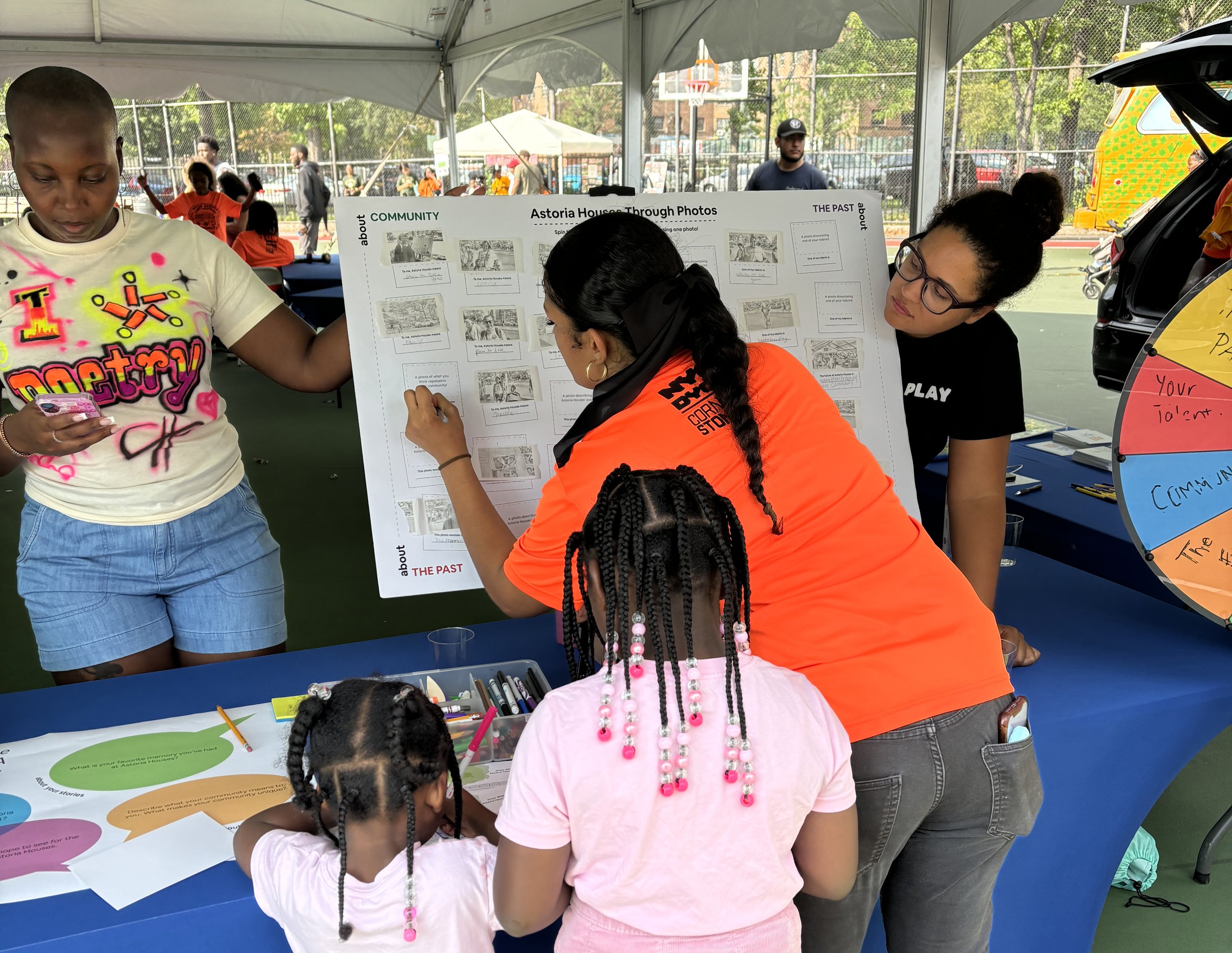
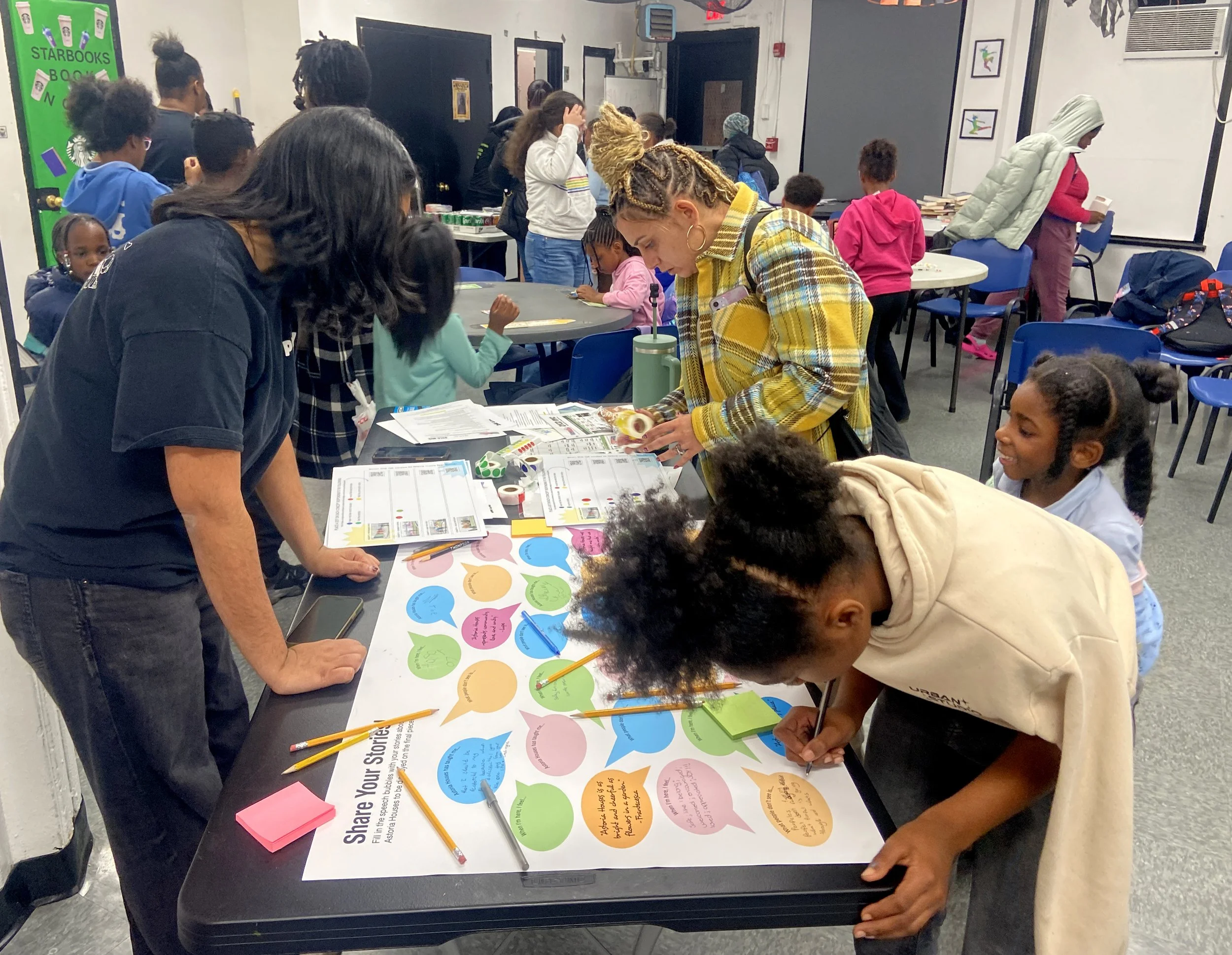
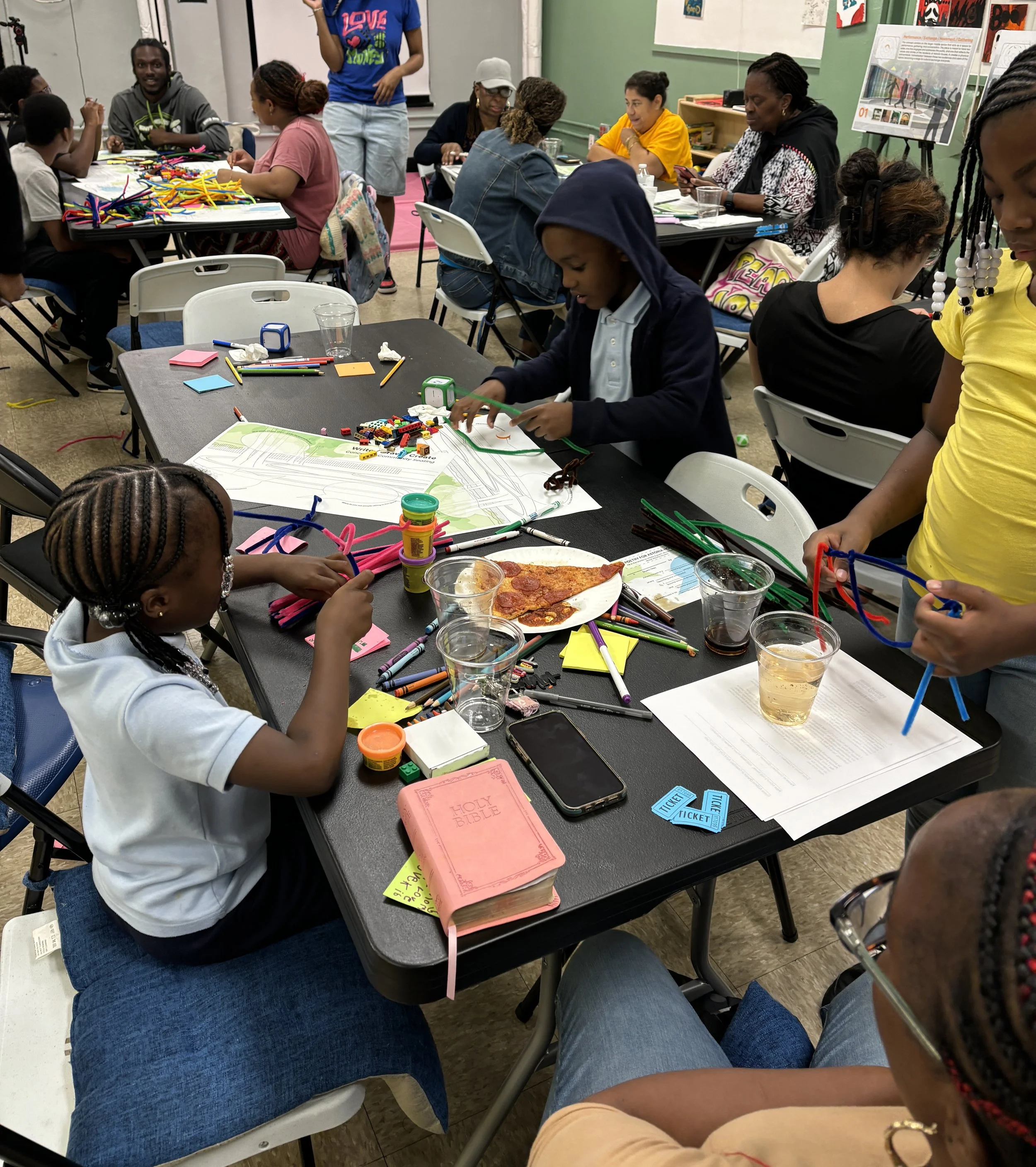
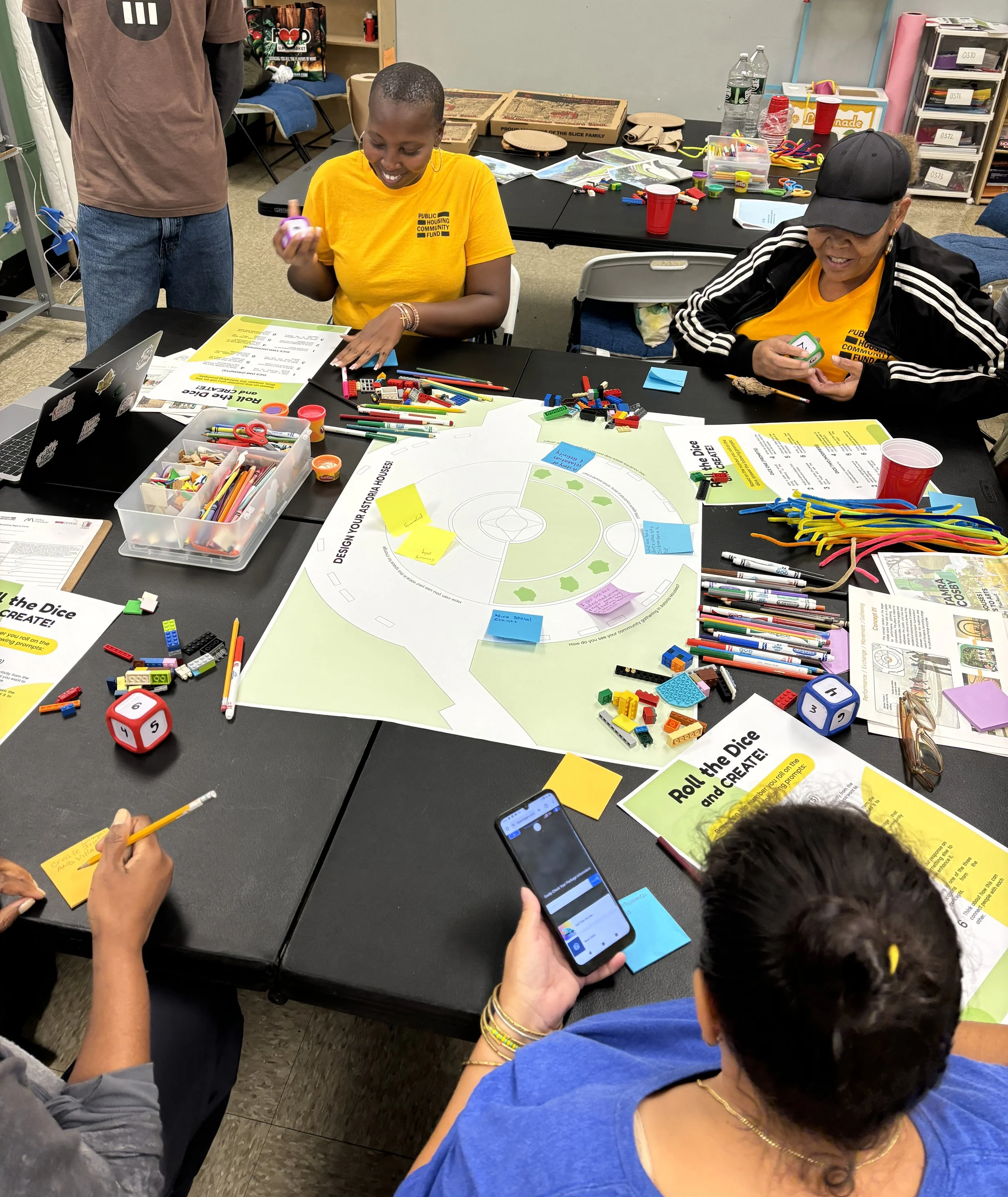
The project was developed through a series of community engagement sessions with Artist-in-Residence Tamra Cosby as part of the From Roots to Arts: Celebrating NYCHA's Cultural Heritage program. From Roots to Arts is an artist-in-residence program developed by the Public Housing Community Fund and NYCHA to highlight artists within NYCHA housing communities to create art and cultivate a deeper sense of community. Through the co-design process, community members shared their memories, experiences, and visions for the space. This process informed both the physical design as well as the stories and imagery embedded within it, creating a permanent piece rooted in the voices of those who live there.
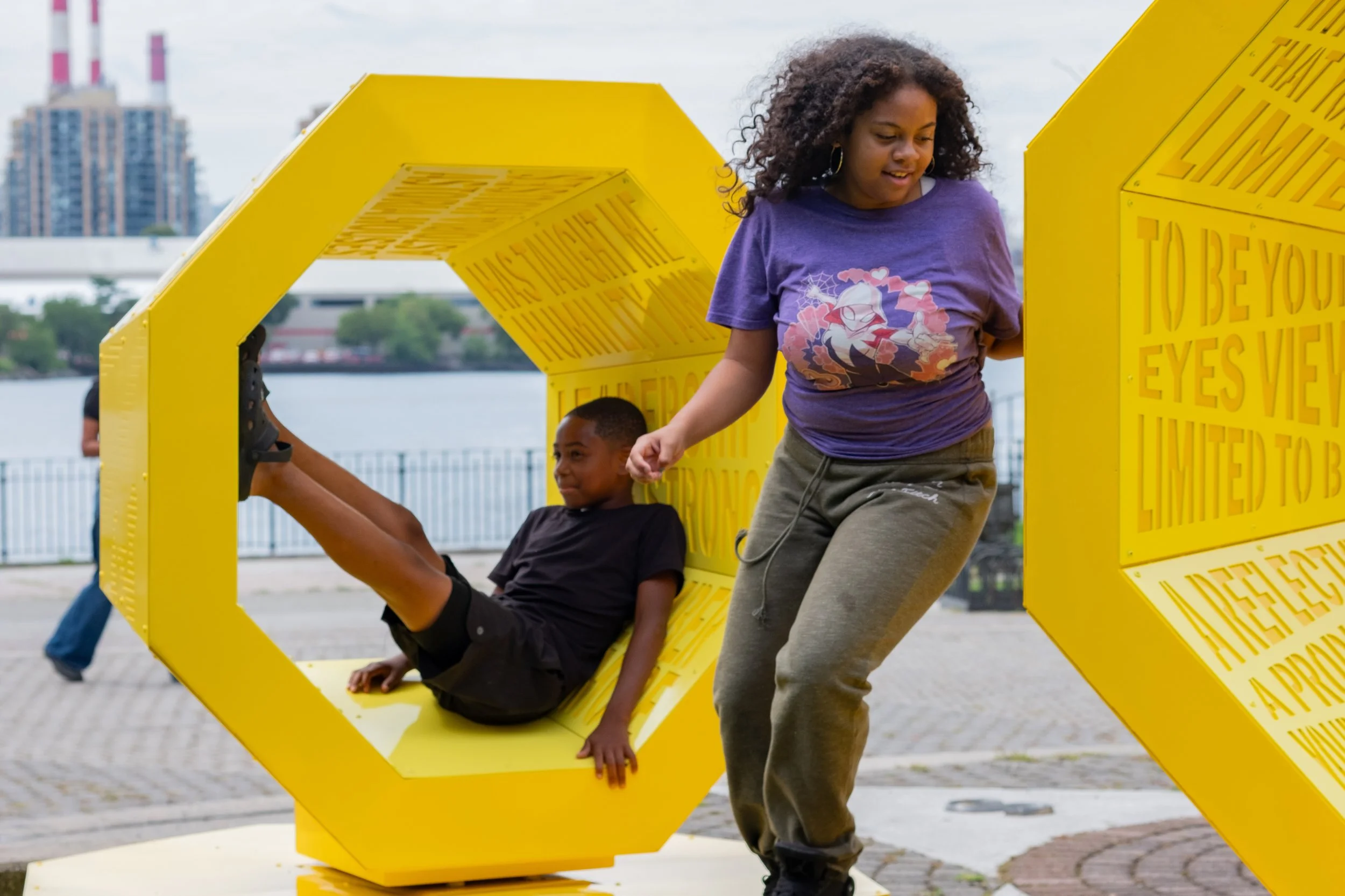
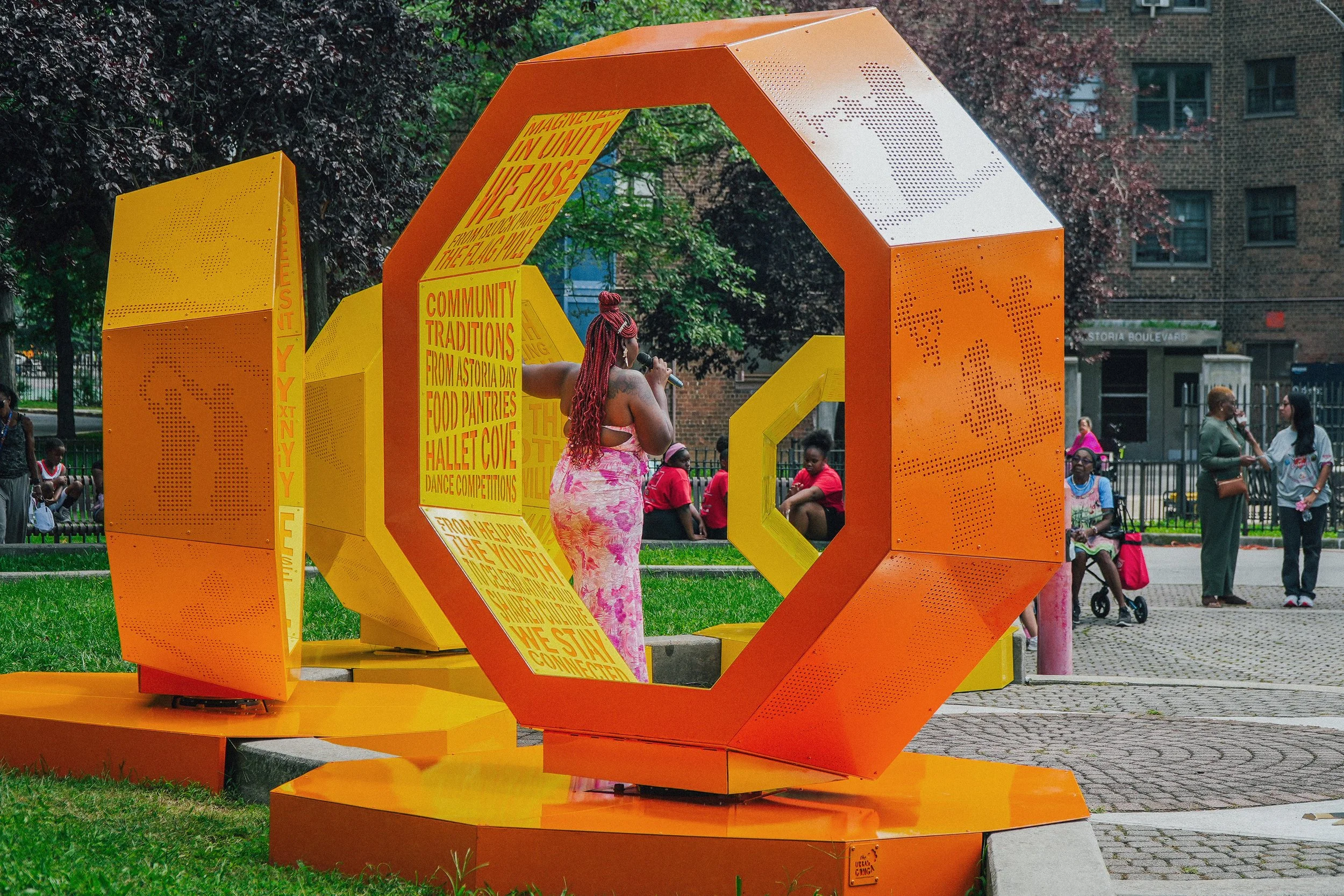
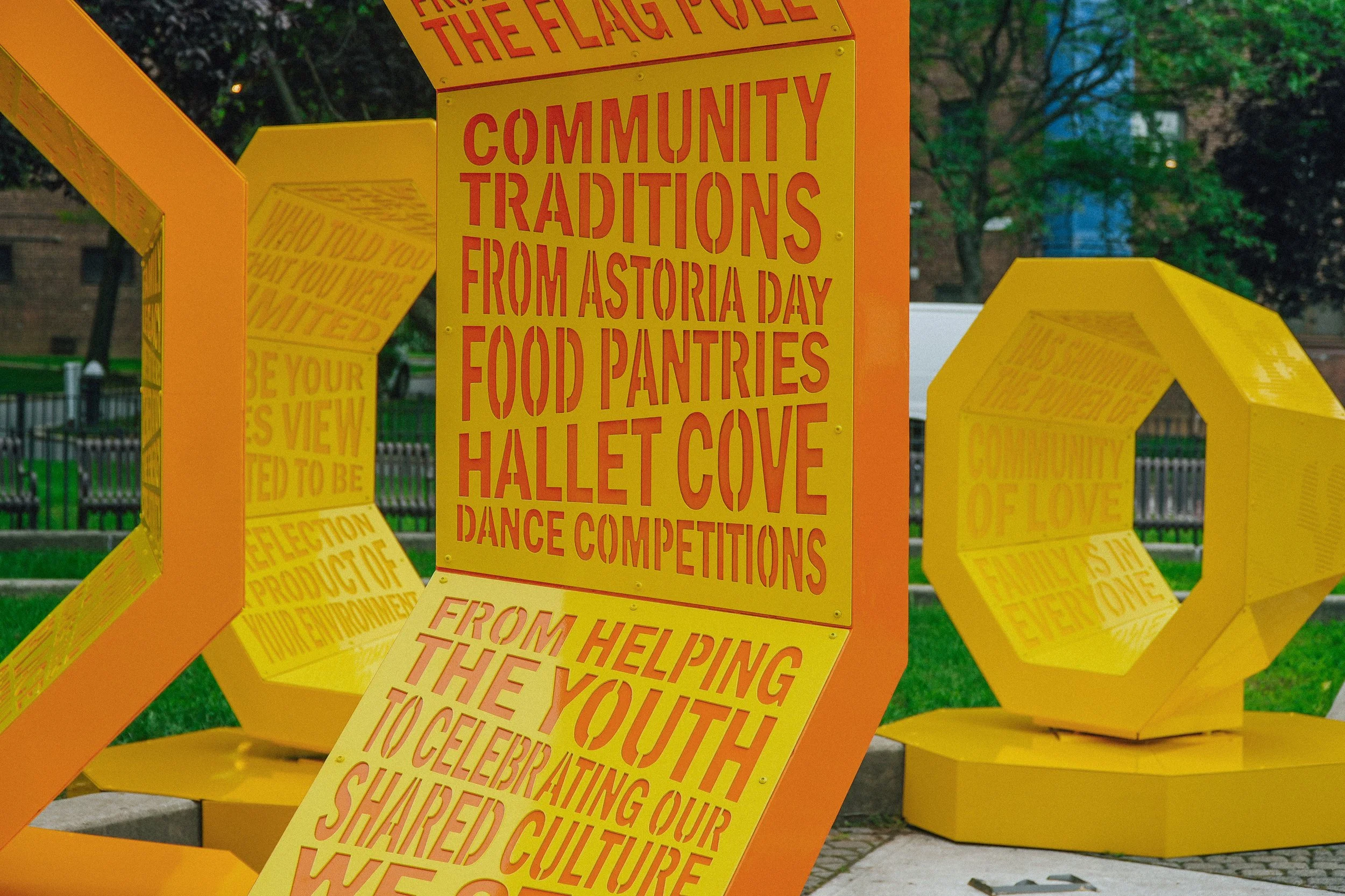
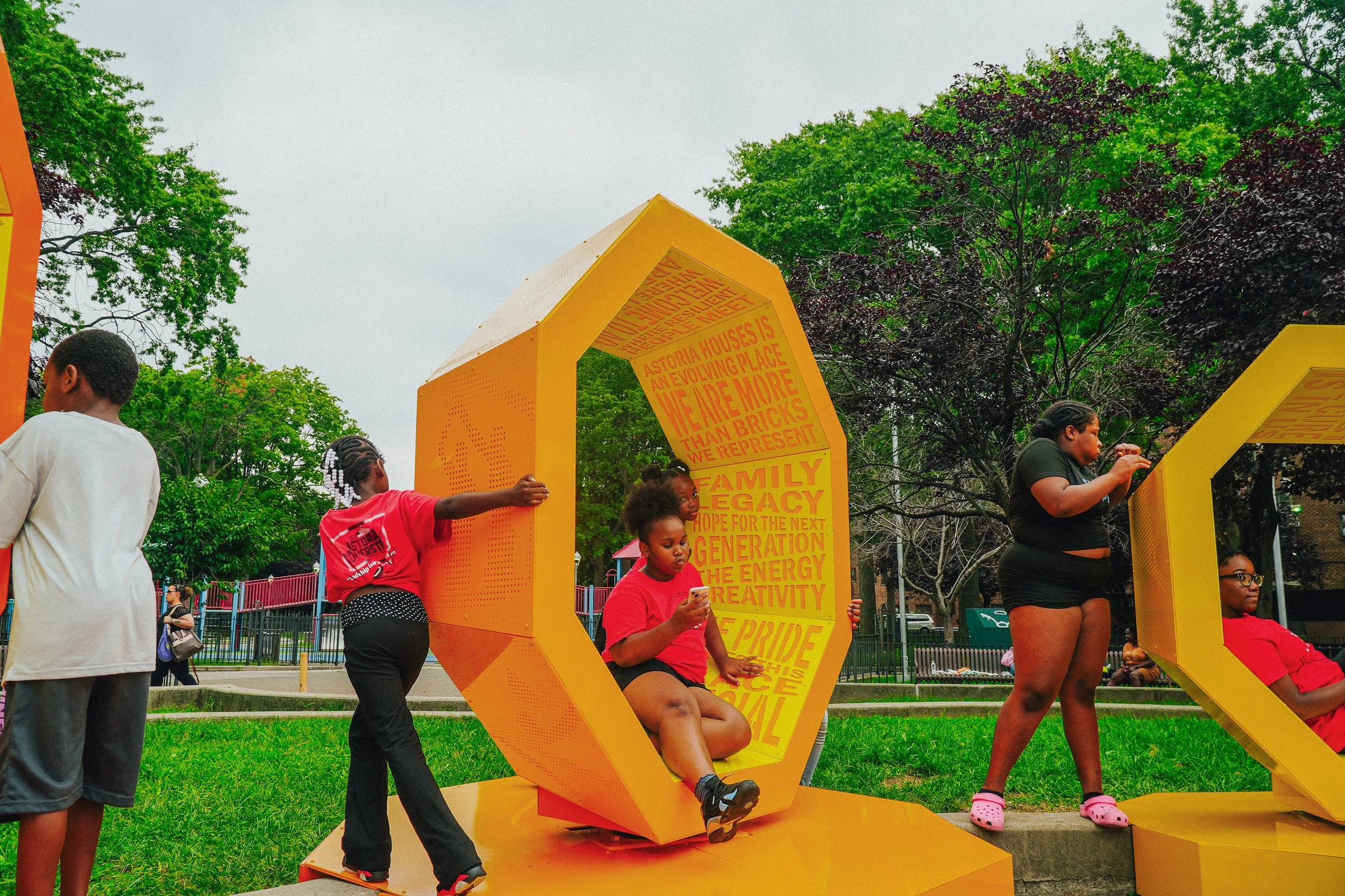
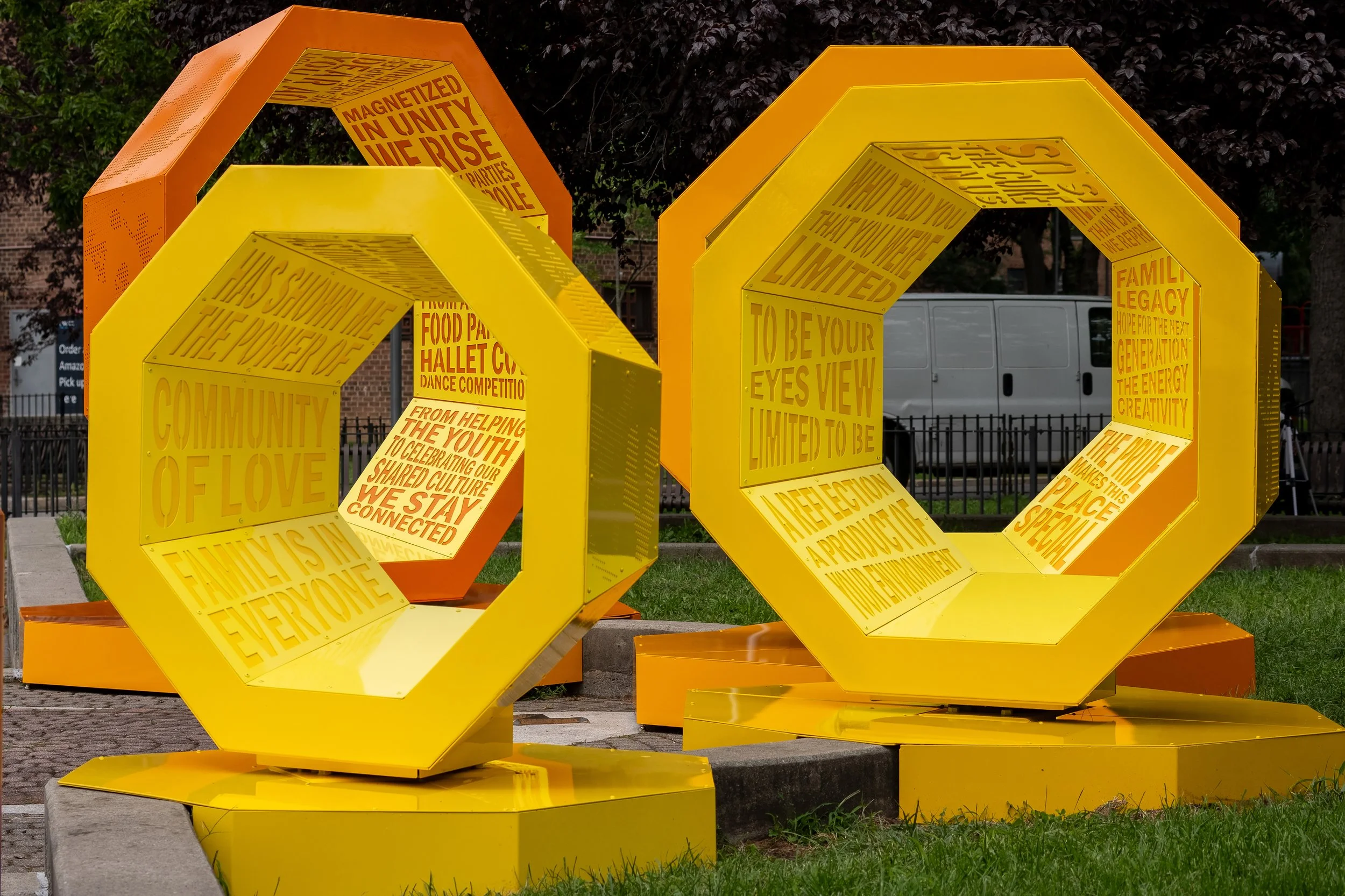
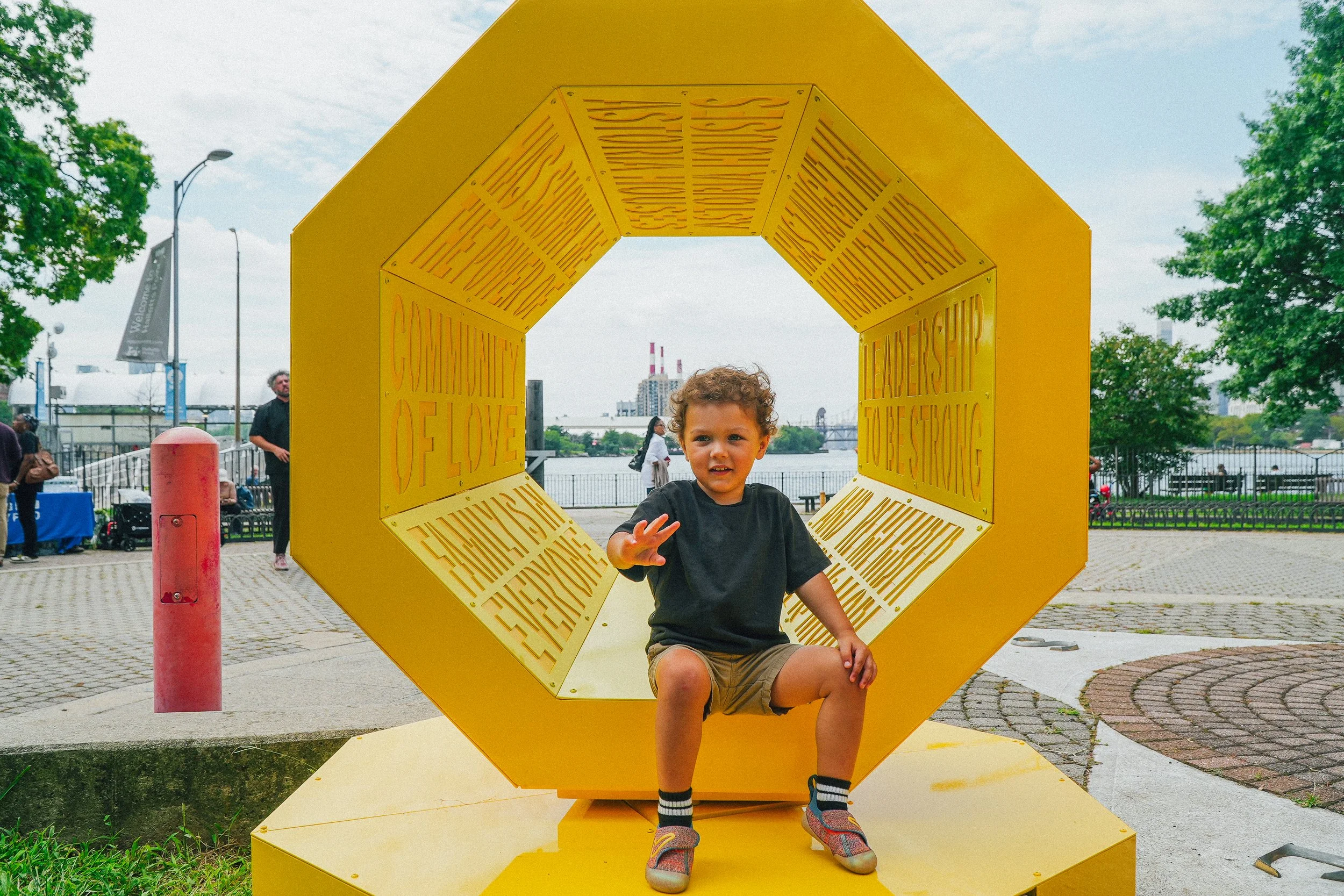
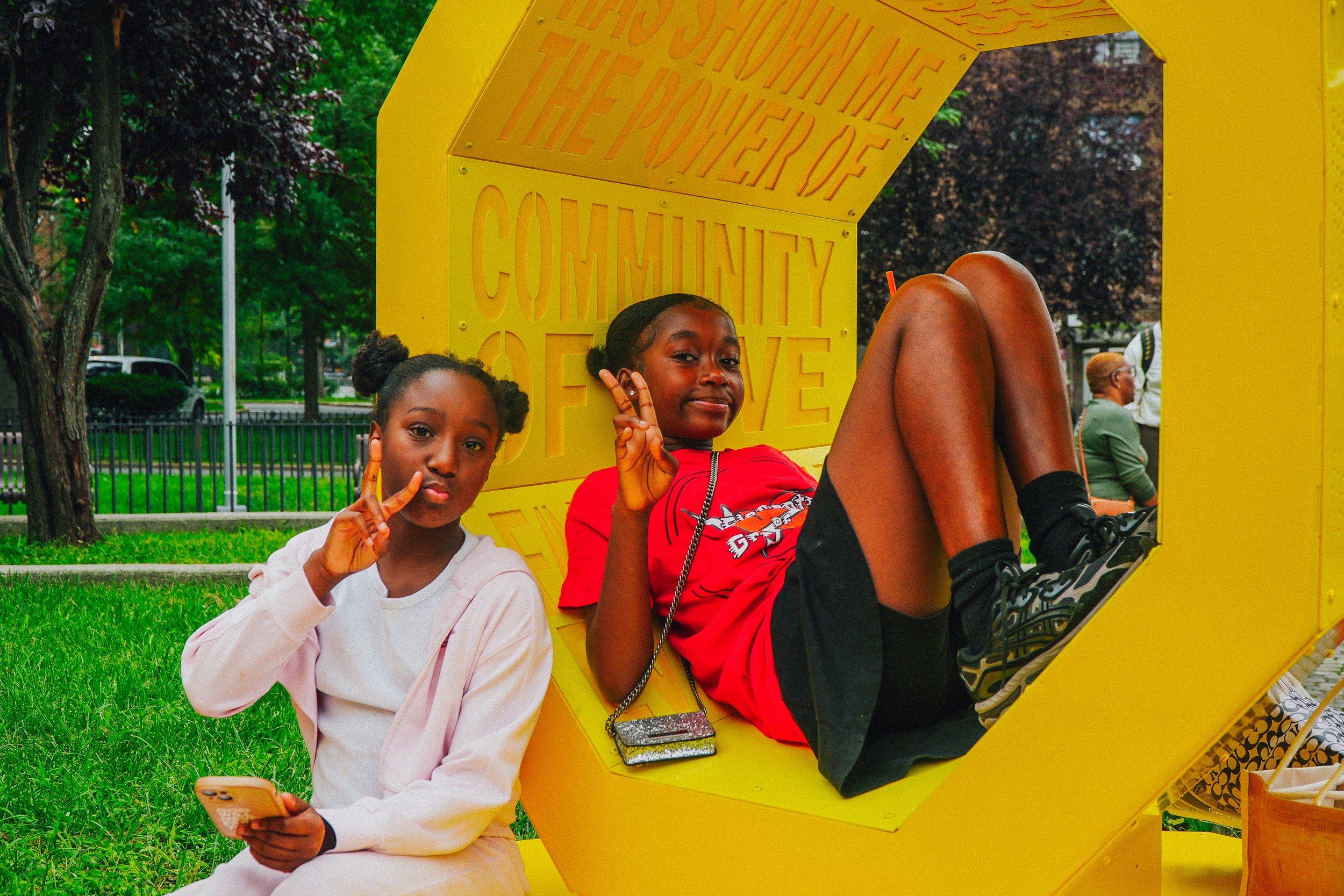
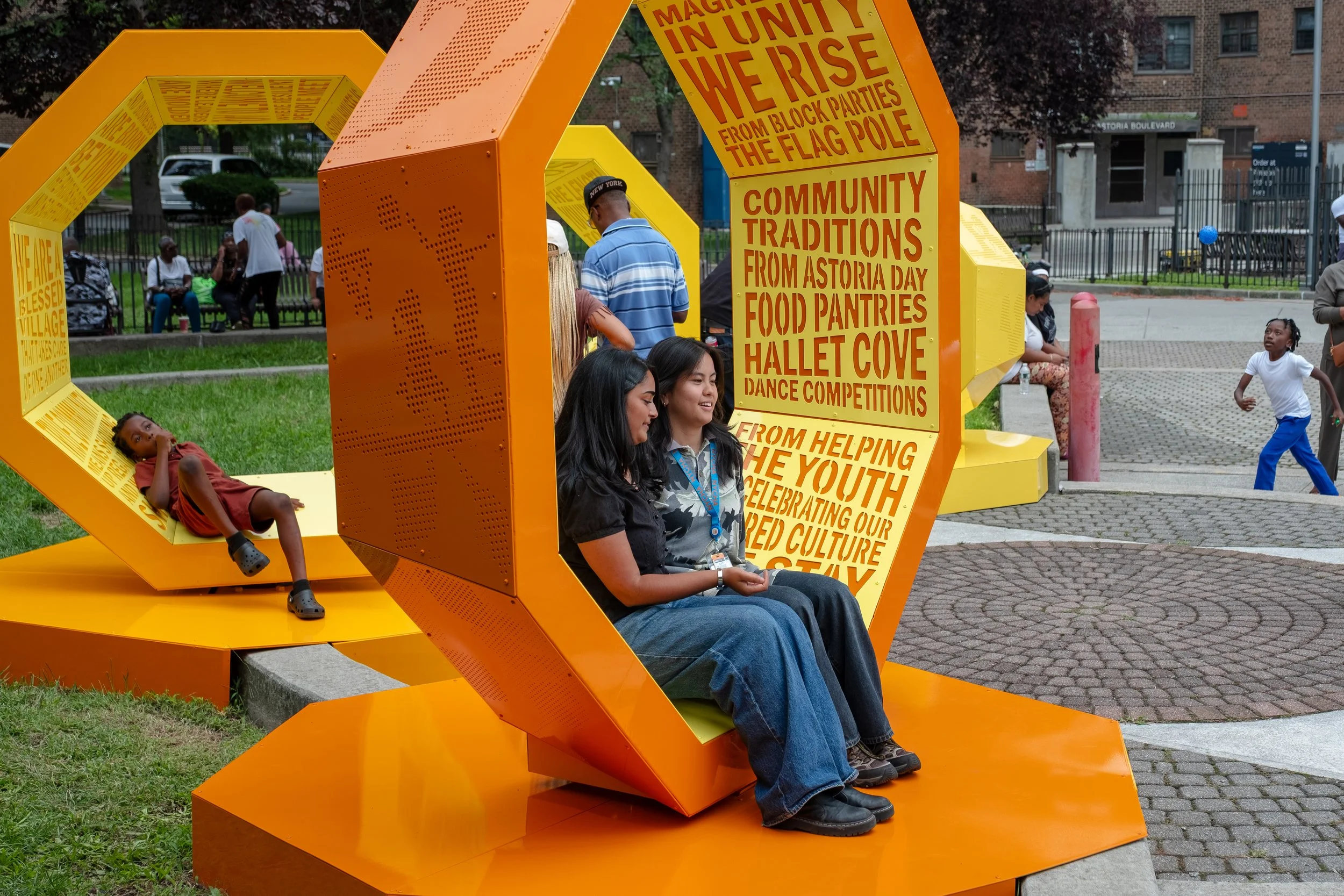
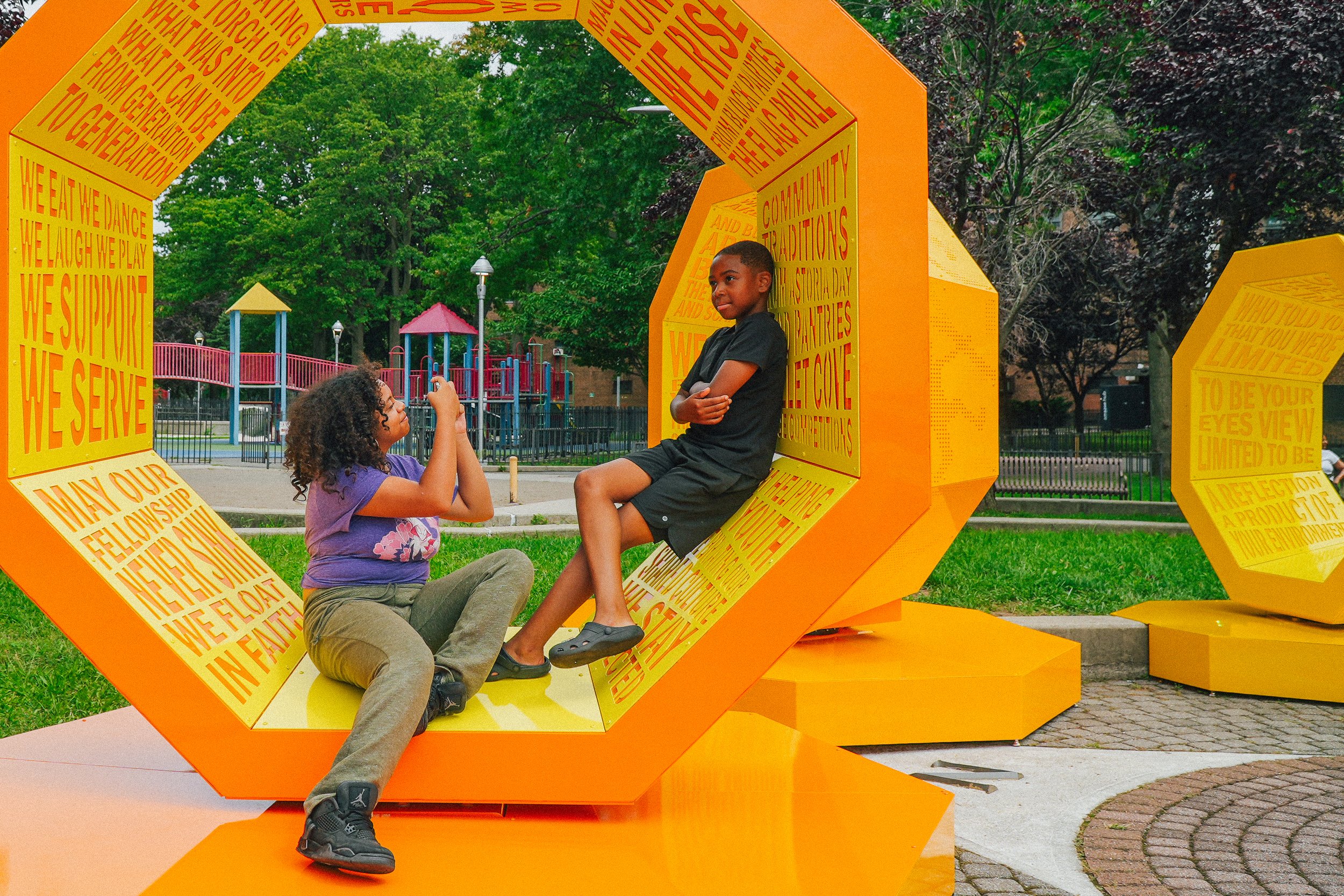
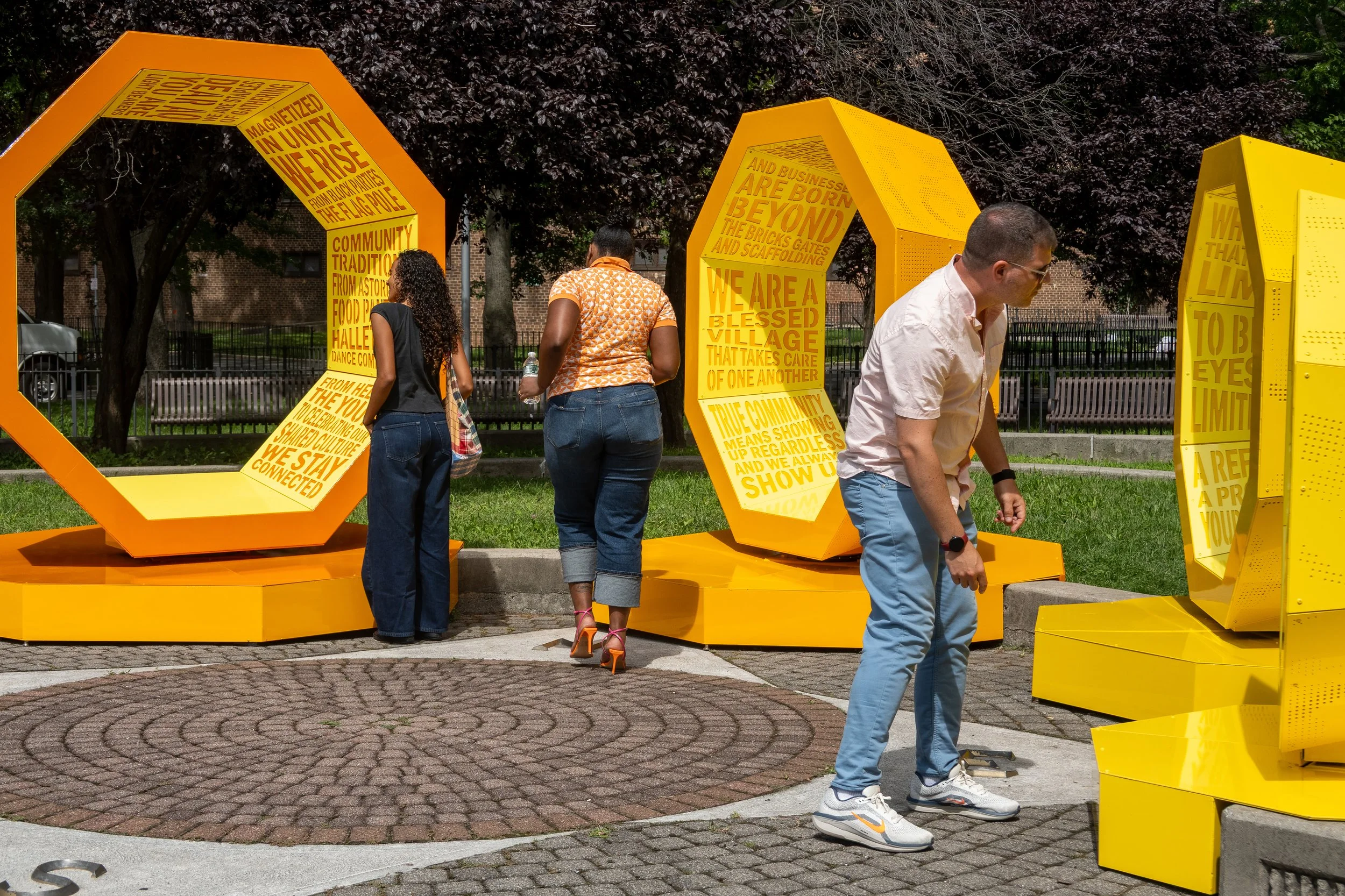
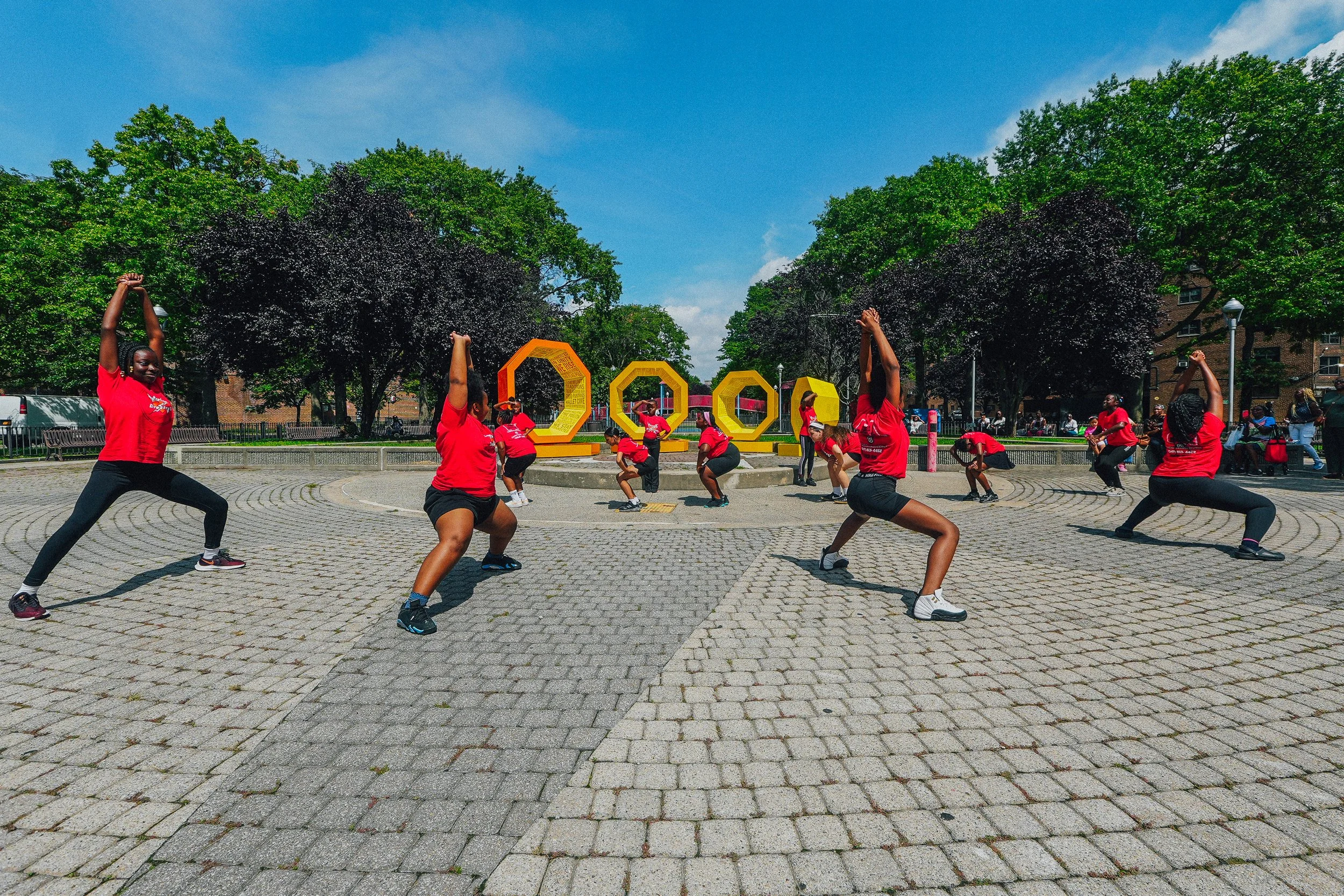
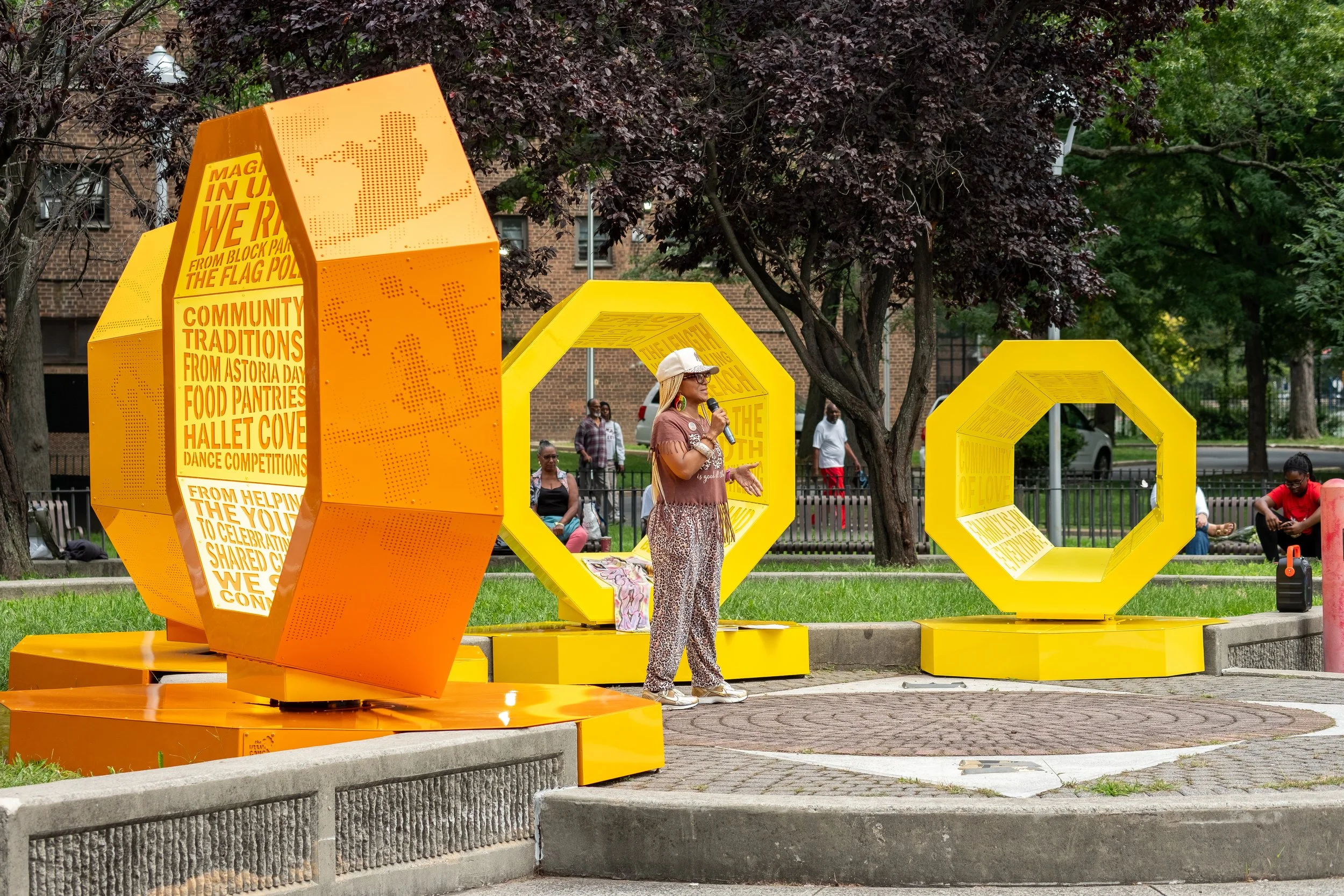
Taking inspiration from the form of a megaphone, an object designed to amplify and project a voice, Revolving Voices reimagines this symbol as a series of large-scale, octagonal forms that follow the curve of the surrounding performance space, gradually decreasing in size. Together, the structures create a sculptural and playable landscape that encourages people to gather, climb, sit, explore, perform, and reflect. The megaphone-like form is broken into four distinct components, each displaying perforated imagery across its outer shell. Viewed from a distance, these images depict the people, talents, and stories that make up the Astoria Houses community, from people playing, to dancing, to protesting. As visitors move closer, another layer of the installation is revealed. The interiors display powerful messages, stories, memories, and poetry from Cosby and other community members, etched directly into the metal panels. Visitors can sit within the structures and become physically surrounded by the voices of their community.
“Projects like Revolving Voices demonstrate the power of transforming public spaces into vibrant hubs of community pride and shared history. The Connected Communities program places residents at the heart of the design process, ensuring that the art in our developments directly reflects the people who live there. We are grateful to the Public Housing Community Fund, The Urban Conga, and the Astoria Houses residents for their partnership and shared vision.”
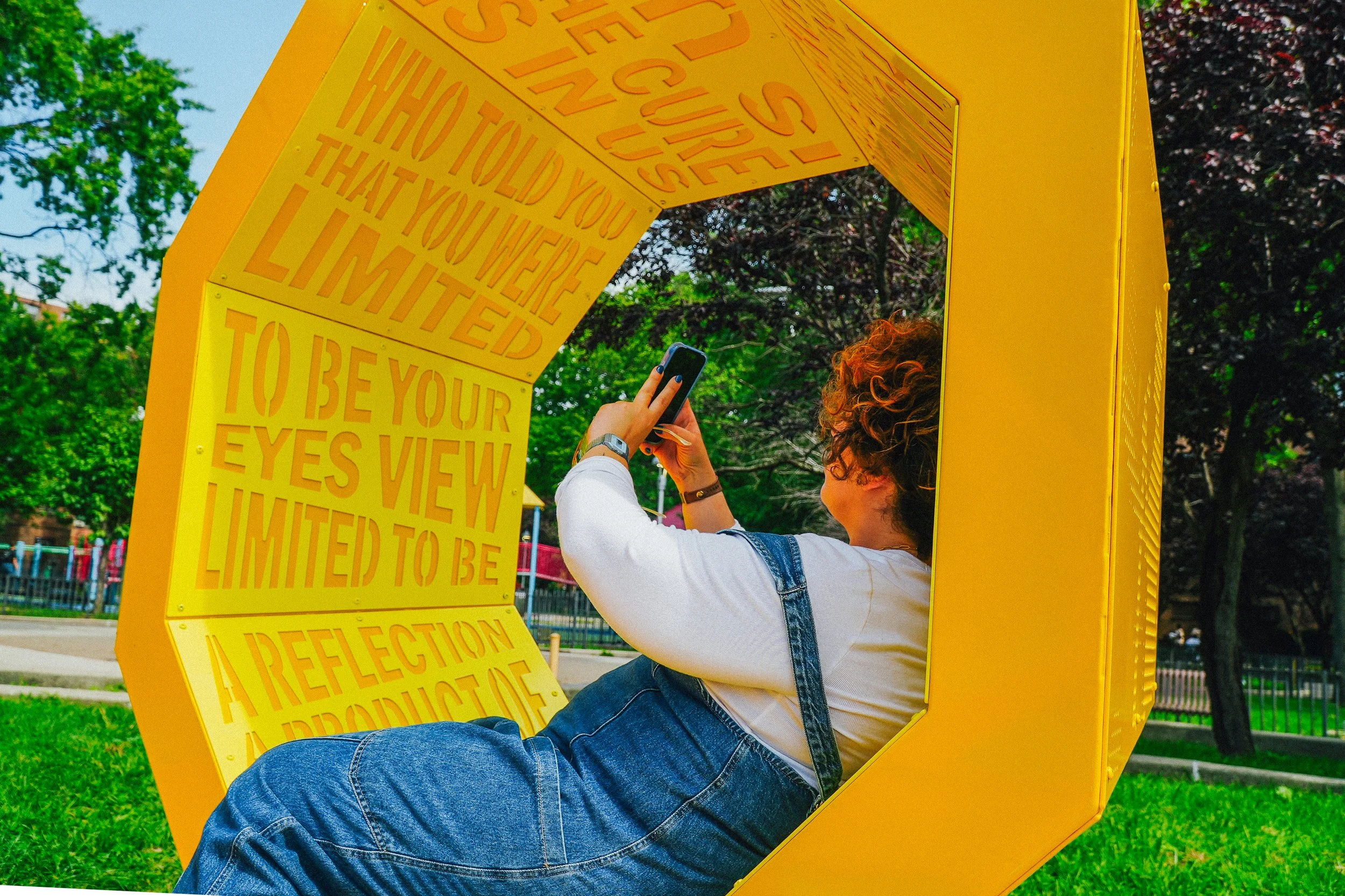
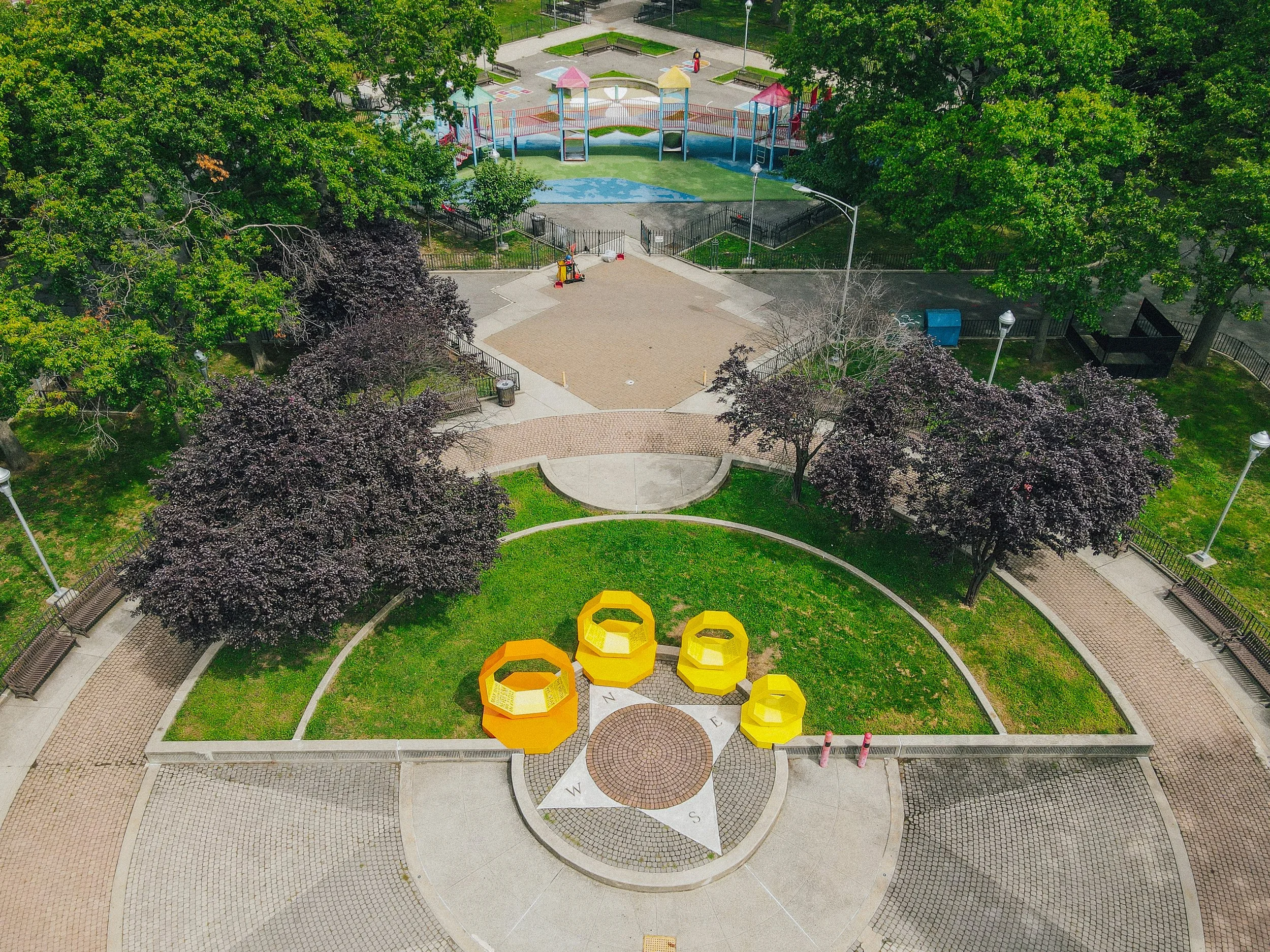
Each of the four components can be manually rotated by users, allowing the installation to continually change its orientation within the space. As the forms turn, they frame different views of Astoria and create new relationships between the installation, the waterfront, and the Astoria Houses community. The structures can face outward toward the water and the broader public, inviting visitors passing through the waterfront to pause, listen, and learn about the community behind them. They can also turn inward, creating spaces that feel more intimate and connected to the Astoria Houses community. This ability to rotate creates an installation that is ever-changing. The community can continually reshape how the structure sits within its environment, transforming the megaphone-like forms into portals that frame new perspectives and encourage visitors to see the neighborhood from different points of view. Revolving Voices reflects the idea that a community’s story is not static, but that it continues to shift, grow, and evolve with the people who contribute to it.
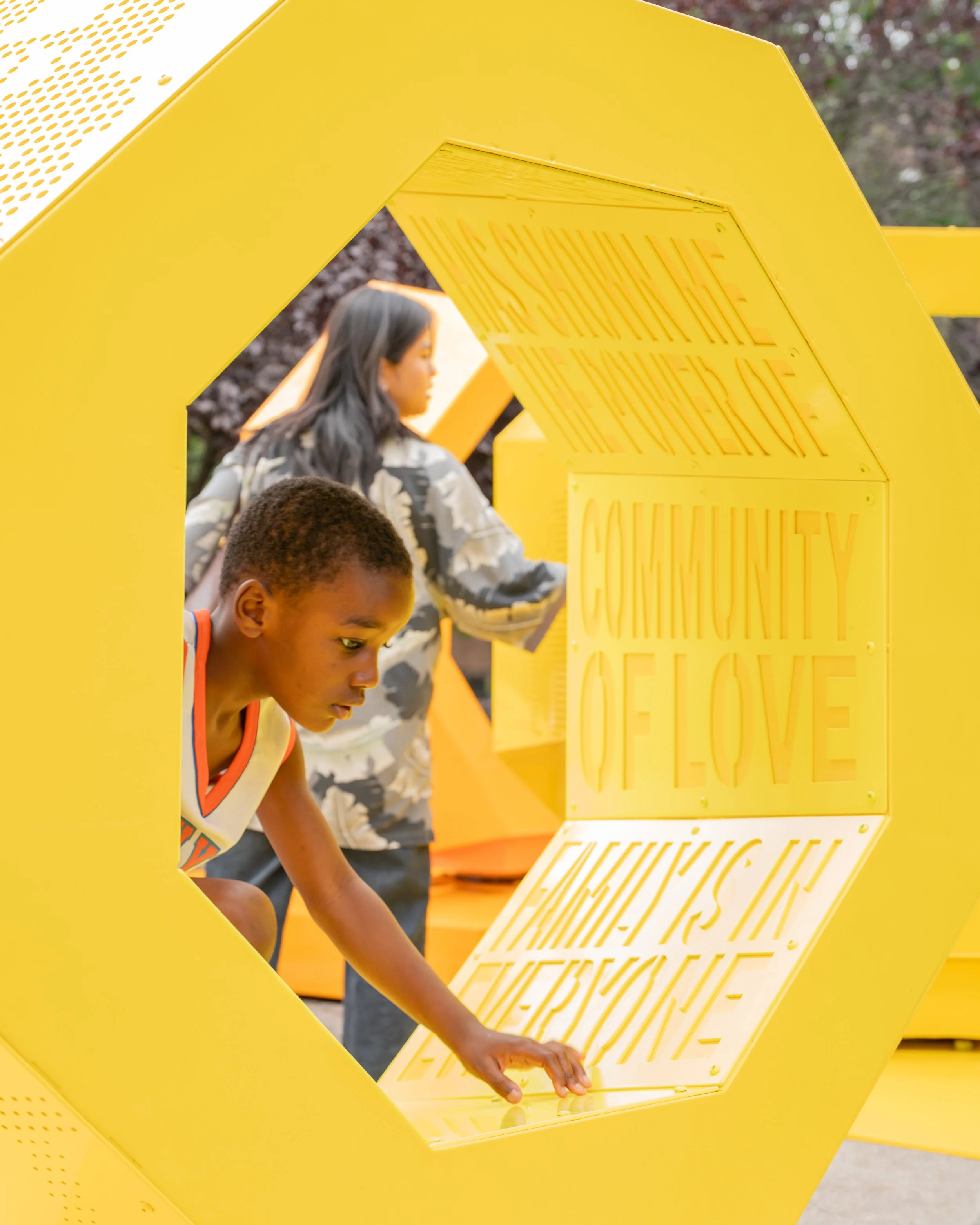
“As an artist and a resident, creating Revolving Voices gave me the opportunity to look at Astoria Houses not only as a place where I live, but as a place filled with history, creativity, relationships, and possibility. This piece reflects the idea that our voices may change over time, but they remain connected. What we contribute today becomes part of the story that someone else carries forward tomorrow.”
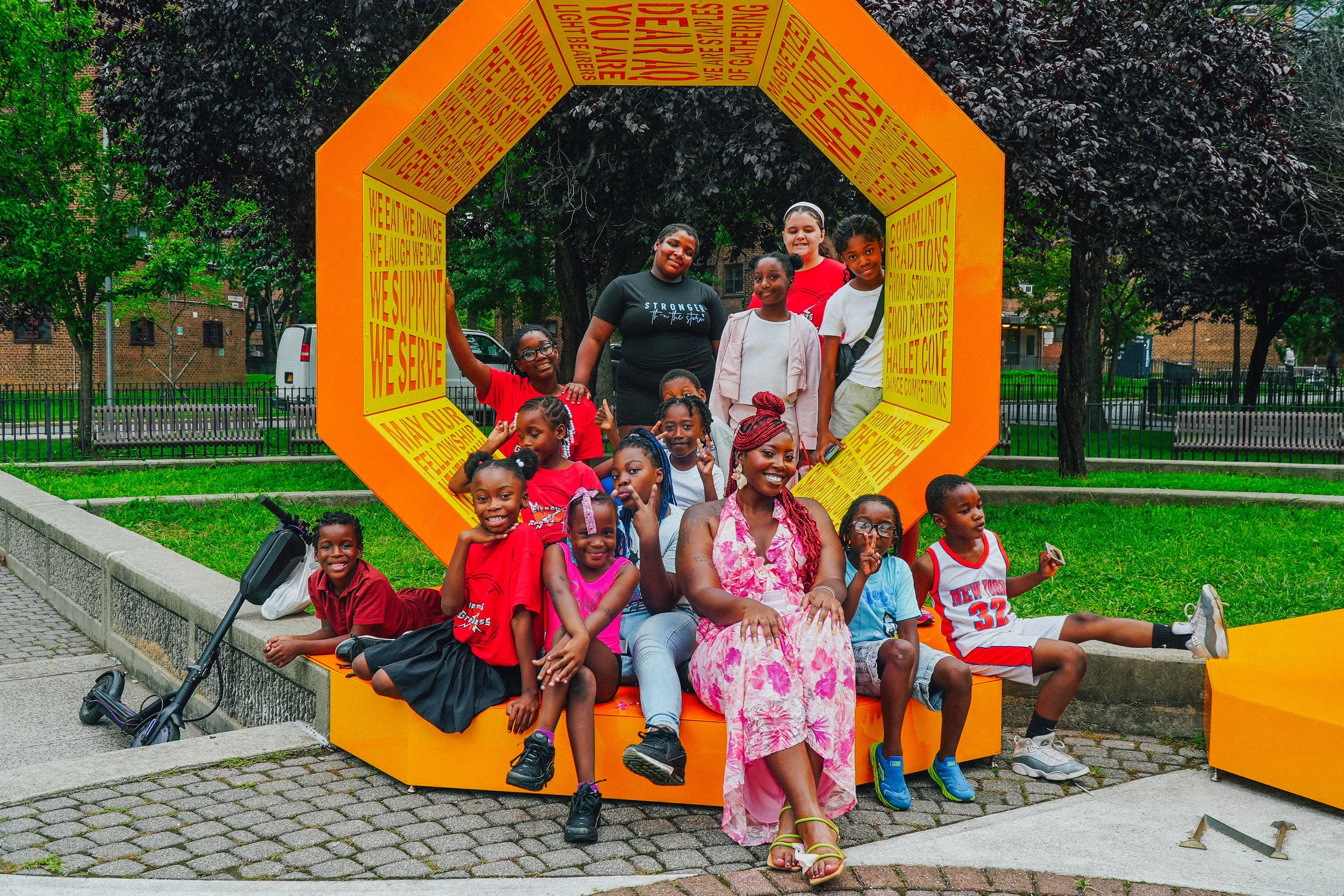
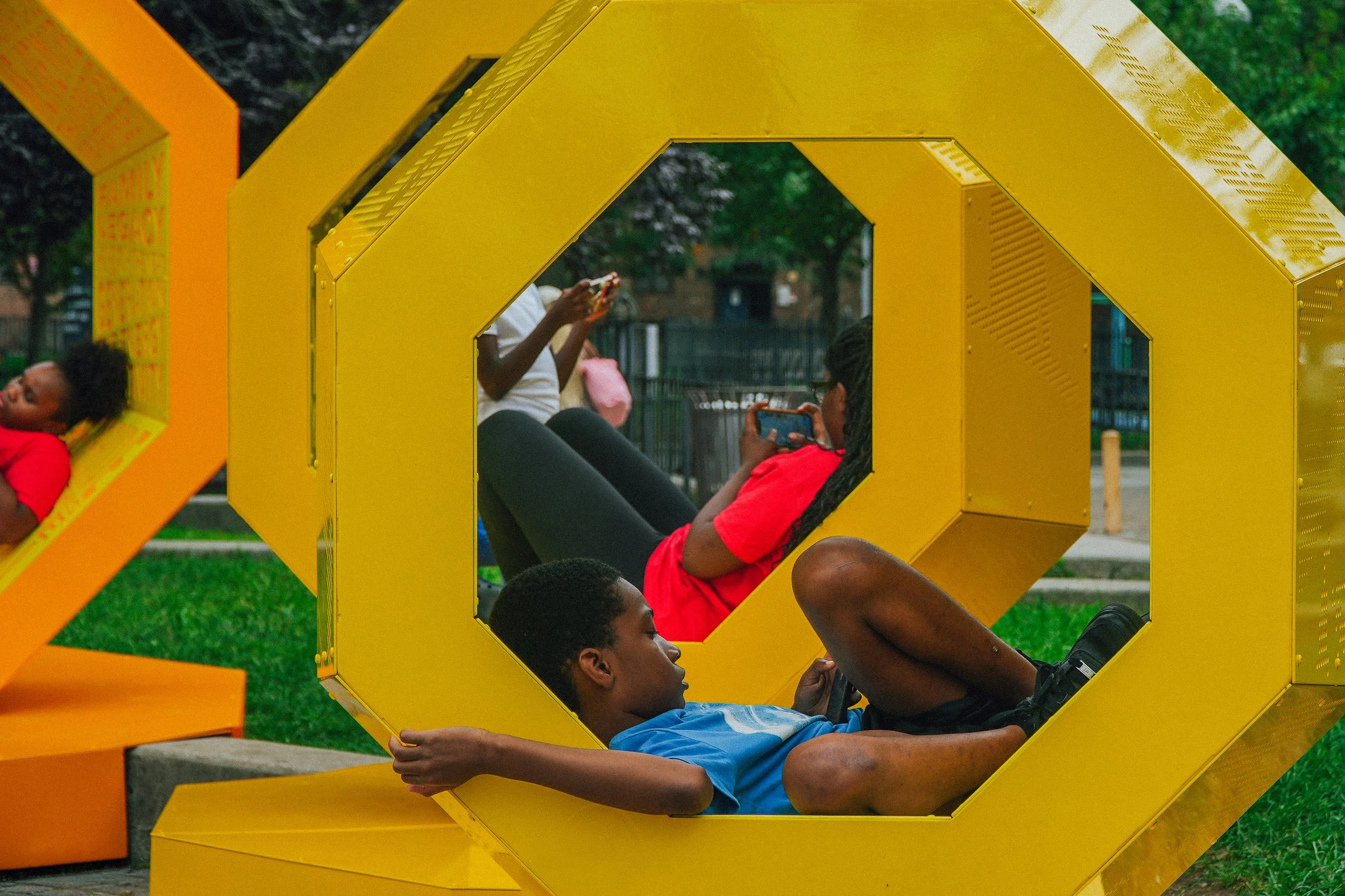
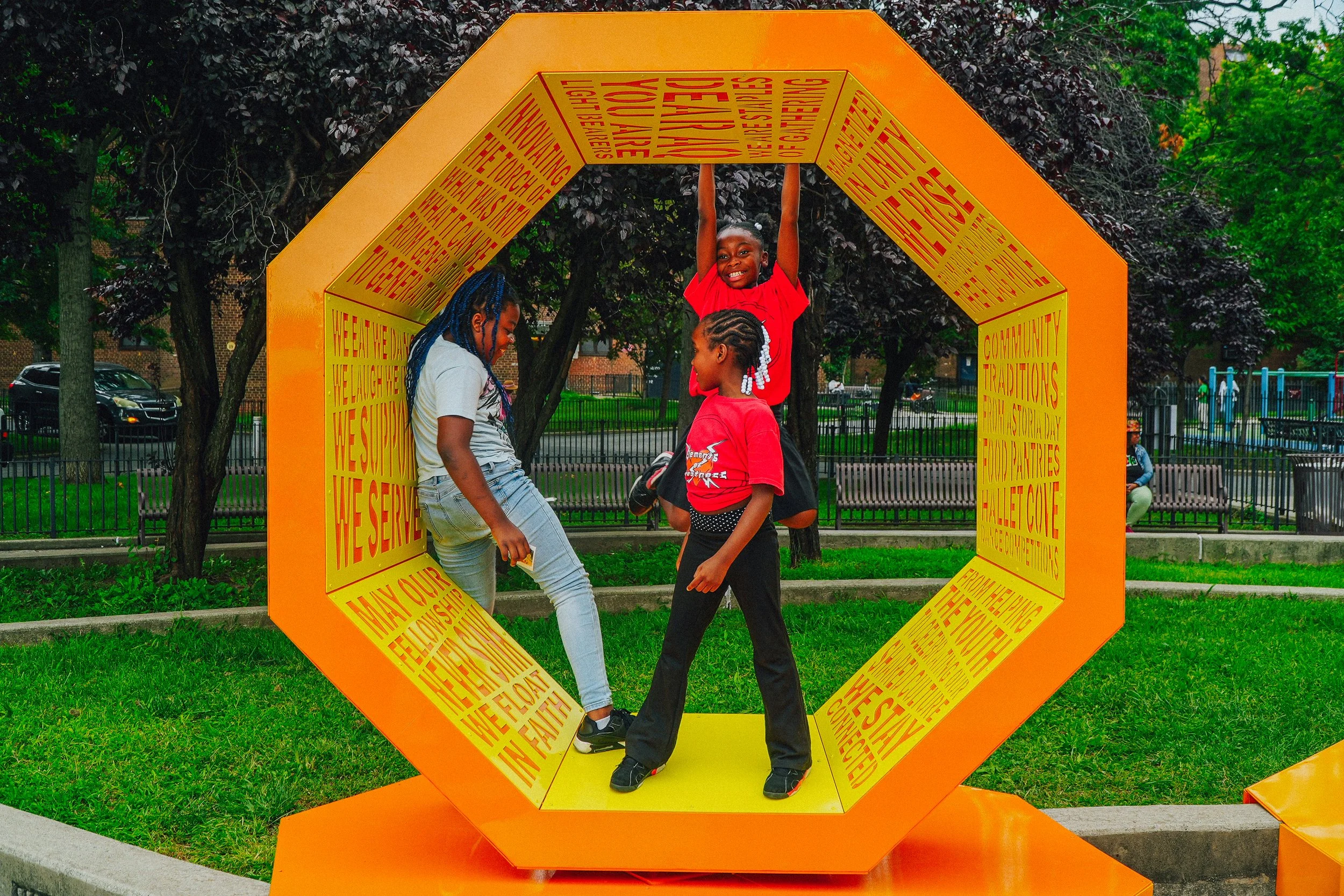
Revolving Voices is designed to support both everyday moments and larger collective gatherings, acting as a public artwork, playable structure, seating area, performance space, and storytelling device. Residents might sit inside the forms for quiet reflection, gather with friends, or encounter stories and memories from their neighbors. During community events, the surrounding space can become a setting for poetry, music, performance, conversation, and shared expression. Revolving Voices creates a space for the Astoria Houses community to perform, converse, listen, and reflect. By placing the voices and creative expressions of residents at the center of a prominent public space, the project invites both the community and the broader public to consider who gets to be heard, whose stories are represented, and how public space can become a platform for collective expression. The result is a landmark shaped by the voices, memories, and continued participation of the community.